Case study · ShyftLabs · 2025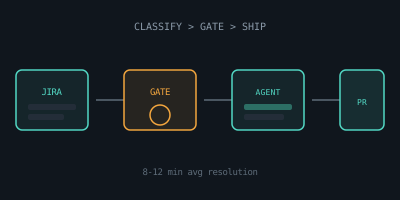
Autonomous SDLC orchestration platform
A two-pass agent system that classifies Jira tickets, implements qualified changes and puts risky work behind human approval.
The problem
Low- and medium-complexity tickets still required human triage, assignment and implementation. Triage—not coding—was the recurring bottleneck across the backlog.
Architecture
- Classify: a 5–8 turn agent pass determines scope, effort and risk.
- Gate: higher-risk changes wait for explicit Slack approval.
- Implement: approved work enters a bounded autonomous run with architecture-aware agent memory.
- Isolate: Git worktrees give every run its own branch and directory, enabling concurrent work without collisions.
Impact
8–12 min
average resolution
~80%
less redundant token spend
3+
concurrent repo branches
Frequently asked questions
How does bounded-turn agent design reduce cost?
It replaces open-ended codebase exploration with pre-computed architecture context and fixed turn budgets.
How do coding agents avoid colliding in one repository?
Each run receives an isolated Git worktree and branch, rather than sharing one working directory.